
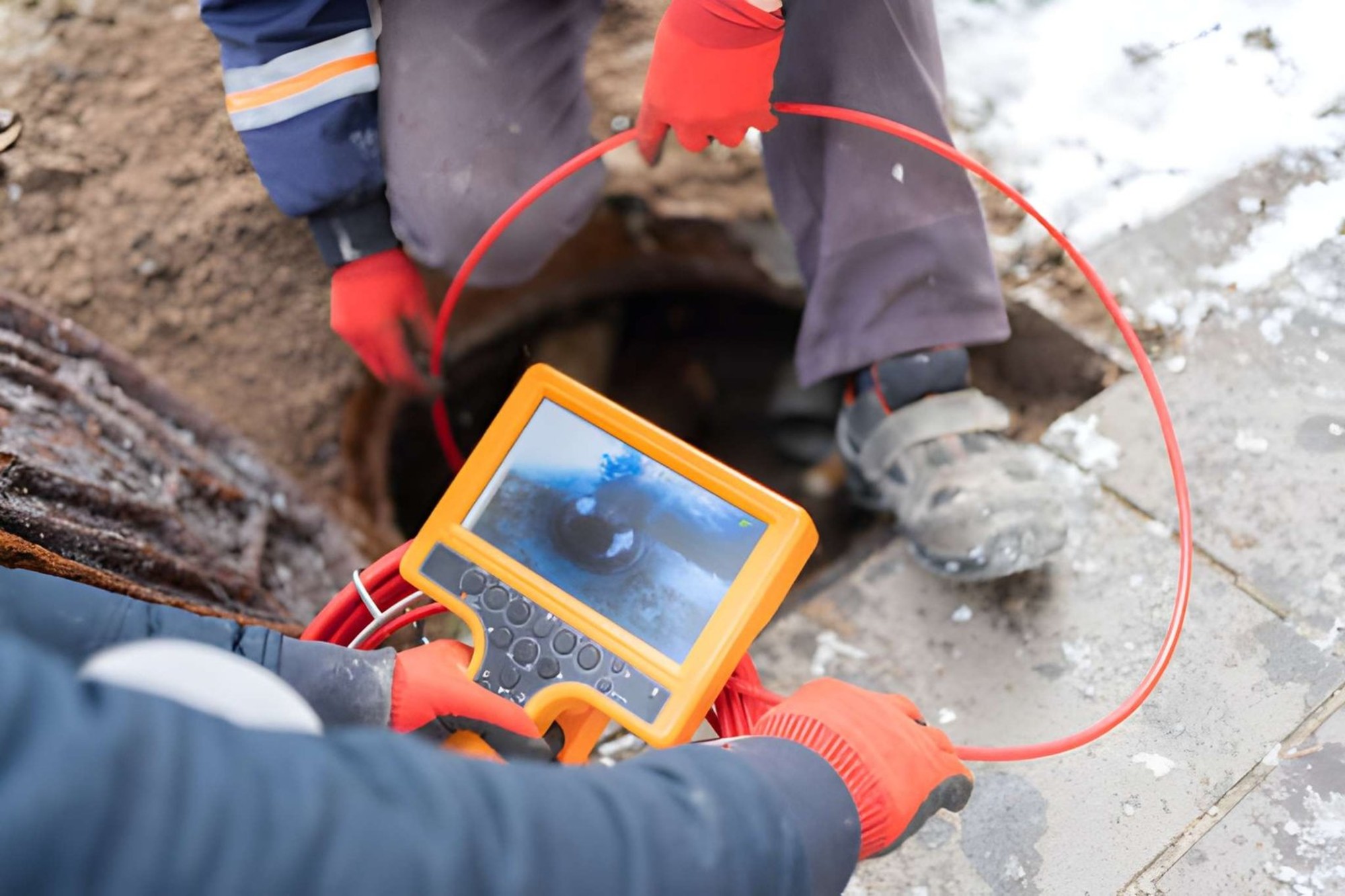
A sewer camera inspection is a diagnostic method where a waterproof camera attached to a flexible cable is inserted into a pipe to record and transmit live video footage to a monitor above ground. This allows technicians to identify blockages, cracks, root intrusion, and other issues inside sewer lines without digging up the ground.
The technology gives plumbers and septic professionals an accurate picture of what’s happening inside pipes that would otherwise be impossible to see. At Western Septic and Excavation, we use this method to locate problems precisely, which reduces the time and cost involved in diagnosing sewer issues.
Understanding how this process works and what it can reveal helps property owners make informed decisions about their sewer systems. This article covers how the technology works and the practical benefits it offers homeowners and buyers.
Key Takeaways
- A sewer camera inspection uses a waterproof camera to view the inside of pipes and identify problems in real time
- The camera transmits live footage to a monitor, allowing technicians to pinpoint exact locations of damage or blockages without excavation
- Property owners benefit from camera inspections by catching issues early, reducing repair costs, and gaining clear information before buying or maintaining a home
How Sewer Camera Technology Works
A sewer camera system uses a waterproof CCTV camera on a flexible cable to transmit real-time video from inside your pipes to an above-ground monitor. The technology can pinpoint blockages, cracks, root intrusion, and structural shifts without any digging.
Components of the Camera System
The core of the system is a high-resolution waterproof camera head attached to a flexible push cable. The cable is rigid enough to push through the pipe but flexible enough to navigate bends and joints.
Key components include:
- Camera head – waterproof, often with built-in LED lighting for visibility
- Flexible cable – ranges from 25 to 300+ feet depending on the application
- Above-ground monitor – displays live footage and records the inspection
- Sonde/locator – a transmitter in the camera head that allows the operator to pinpoint the camera’s exact underground position
- Cable reel – houses and feeds the cable into the pipe
The locator is particularly useful. It lets the technician mark the precise location of a problem on the surface, which is critical for any excavation work that follows.
Process Overview
The technician accesses the sewer line through a cleanout, drain opening, or manhole. The camera is then pushed through the pipe while the operator watches live footage on the monitor.
As the camera moves, the system records footage and logs the depth and distance at each point. If a problem is found, the operator can use the locator to mark it above ground.
The process is non-invasive. No digging is required unless a repair is needed after the inspection confirms a defect.
Types of Pipes Commonly Inspected
Sewer cameras are used across a wide range of residential and commercial pipe types:
| Pipe Type | Common Issues Found |
|---|---|
| PVC | Joint separation, root intrusion |
| Cast iron | Corrosion, scaling, cracks |
| Clay/terracotta | Breaks, root intrusion, shifting |
| Orangeburg | Collapse, deformation |
| Concrete | Cracking, offset joints |
Pipe diameter matters. Most residential inspections involve pipes between 3 and 6 inches in diameter. Larger commercial lines may require different camera equipment suited to wider diameters.
Benefits of Sewer Camera Inspections for Property Owners
Sewer camera inspections give property owners accurate information about pipe condition, which helps with early problem detection, repair cost management, and property transactions.
Detecting Blockages and Damage
A sewer camera sends real-time video footage through your drain lines, letting a technician see exactly what is inside your pipes. This removes the guesswork from diagnosing plumbing problems.
Common issues a camera inspection can identify include:
- Root intrusion from nearby trees growing into pipe joints
- Grease or debris buildup causing partial or full blockages
- Cracked or collapsed pipe sections from soil shifting or age
- Misaligned joints where pipe sections have separated
Because the camera pinpoints the exact location and cause of a problem, repairs can be targeted rather than exploratory. This means less digging and faster resolution.
Preventing Costly Repairs
Catching a small crack or slow-building blockage early costs significantly less than responding to a full sewer backup or pipe collapse. A camera inspection lets you act before the problem escalates.
Without a camera inspection, a plumber may need to excavate sections of your yard to find the source of an issue. That excavation alone can add hundreds or thousands of dollars to a repair bill.
Inspections also produce video documentation. This lets you:
- Compare repair quotes from multiple contractors using the same footage
- Verify that completed repairs were done correctly
- Support warranty or insurance claims with visual evidence
Supporting Real Estate Transactions
Sewer lines are rarely included in a standard home inspection. A dedicated sewer camera inspection fills that gap and gives buyers and sellers factual information about pipe condition before closing.
For buyers, an inspection can reveal existing damage that may require negotiation on price or repair terms. For sellers, a clean inspection result removes uncertainty and can support a smoother sale.
Older homes—particularly those built before the 1980s—are more likely to have clay or cast iron pipes that are prone to cracking and root intrusion. A camera inspection on these properties provides specific, documented details rather than assumptions based on age alone.