
Trenchless Sewer Repair | Western Septic & Excavation
- Western Septic & Excavation
- Buhl, ID
- Phone: 208.735.5346
- westernseptic.com
Sewer Repair Without Destroying Your Property
For most of the history of underground plumbing, replacing a sewer line meant one thing: dig a trench the entire length of the pipe, remove and replace it section by section, backfill the trench, and then spend additional time and money repairing everything the excavation destroyed — the lawn, the driveway, the concrete patio, the sprinkler system, and the landscaping you spent years developing.
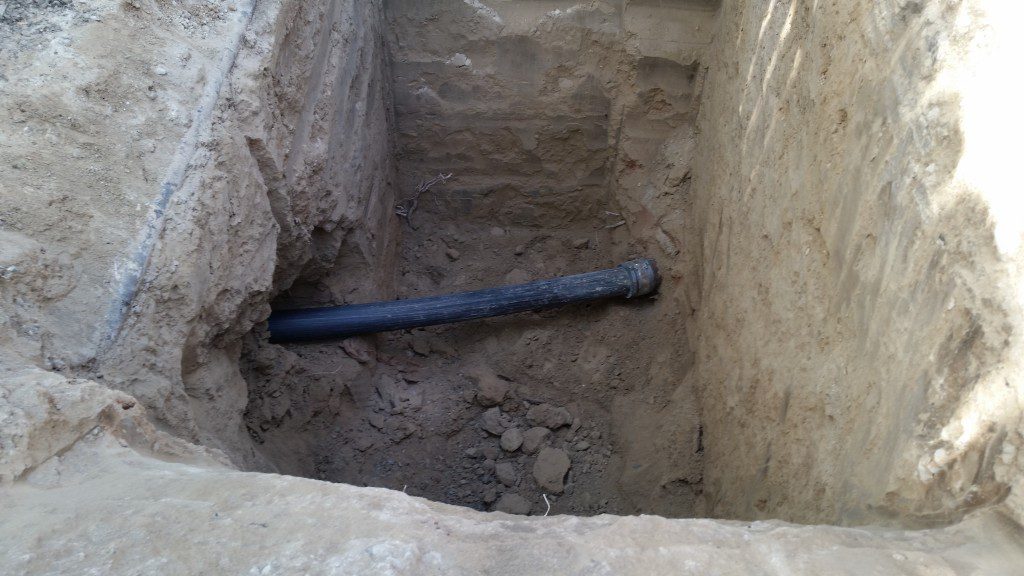
Trenchless sewer repair changed all of that. Using technology developed specifically to work inside existing pipes, we can now repair or fully replace many sewer lines with minimal surface disruption. Two small access points instead of a full-length trench. Hours instead of days. And your yard, driveway, and landscaping stay intact.
Western Septic & Excavation offers trenchless sewer repair throughout Southern Idaho. Before recommending any repair, we begin with a professional sewer camera inspection to get a clear view inside your pipes, identify the exact cause of the problem, and determine whether trenchless methods are the right solution. Our specialized equipment, trained crew, and years of experience allow us to complete trenchless work correctly while minimizing disruption to your property.

How Trenchless Sewer Repair Works
There are two primary trenchless methods we use, each suited to different situations:
Pipe Bursting
Pipe bursting is used when the old pipe needs to be fully replaced. A cone-shaped bursting head is attached to a new pipe and pulled through the existing pipe from one access point to another. As it moves through, the bursting head fractures and displaces the old pipe outward into the surrounding soil, while simultaneously pulling the new pipe in behind it.
The result is a brand-new seamless pipe — typically high-density polyethylene (HDPE) — installed in the same location as the old one. HDPE pipe is flexible, corrosion-resistant, root-proof, and designed to last 50 or more years. The old pipe is gone, replaced entirely, with no trench and minimal surface disruption.
CIPP Lining — Cured-in-Place Pipe
CIPP lining is used when the existing pipe structure is still usable but needs rehabilitation — sealing cracks, covering joint gaps, stopping root intrusion, or restoring structural integrity to a deteriorating line. A flexible liner saturated with epoxy resin is inserted into the existing pipe and expanded to conform precisely to the pipe’s interior shape. The resin cures and hardens, creating a smooth, seamless new pipe wall inside the existing pipe.
CIPP lining is particularly effective for sealing multiple cracks or root intrusion points along a line without having to locate and excavate each one individually. Once cured, the liner is smooth, corrosion-resistant, and provides no joints or entry points for future root intrusion.
What Trenchless Repair Protects
Understanding what is blocking your pipes helps us choose the right clearing method. The most common causes we see in Southern Idaho homes and businesses are:
- Grease and fat buildup — the leading cause of kitchen drain clogs and commercial sewer blockages. Grease sticks to pipe walls and accumulates over time, narrowing the pipe diameter until flow is severely restricted.
- Tree and shrub root intrusion — roots naturally seek moisture and can infiltrate the smallest cracks or joint gaps in your sewer line, growing inside the pipe until they cause partial or complete blockage.
- Hair, soap scum, and personal care products — the primary cause of bathroom drain slowdowns, especially in showers and tubs.
- Mineral scale and sediment — Idaho’s hard water leaves calcium and magnesium deposits inside pipes over time, particularly in older plumbing systems.
- Non-flushable materials — wipes, feminine products, paper towels, and other items that do not break down properly create blockages in the line.
- Structural pipe problems — old or deteriorating pipes can develop bellies, cracks, or joint separations that trap debris and cause chronic buildup.
The Difference Between Drain Cleaning and Sewer Line Cleaning
Is Trenchless Right for Your Situation?
Trenchless methods work well for the majority of residential and commercial sewer line problems. However, they are not universally applicable. Pipes with extensive bellying or significant misalignment may not be suitable for trenchless approaches. Pipes that have fully collapsed in sections may require targeted open-cut excavation at the collapse point.
This is why we start with a camera inspection before recommending any repair method. The inspection shows us the exact condition and configuration of your pipe, which determines whether trenchless is viable and which method is most appropriate. We will always tell you honestly when open excavation is the right choice rather than trying to apply a trenchless solution where it is not appropriate.
The True Cost Comparison
When homeowners hear that trenchless pipe repair sometimes costs more per foot of pipe than traditional open-cut repair, they often assume traditional is cheaper. This comparison misses the real picture.
Traditional sewer replacement costs include: the pipe itself, the excavation, the labor to remove and replace the pipe, the backfill, the compaction, and the surface restoration — driveway repaving, landscaping replacement, sprinkler repair, concrete work. These restoration costs regularly add $3,000 to $15,000 or more on top of the pipe work itself.
Trenchless repair eliminates virtually all of those restoration costs. In the majority of cases, the total project cost for trenchless repair is equal to or less than the total project cost for traditional excavation when all factors are accounted for.
Find out if trenchless is the right solution for your sewer problem. Call Western Septic & Excavation at 208.735.5346.
Frequently Asked Questions — Trenchless Sewer Repair
A: Understanding how trenchless sewer repair works also explains why it can be completed much faster than traditional excavation methods. Most trenchless repairs are typically finished within 4 to 8 hours, depending on the condition, length, and complexity of the sewer line.
Traditional open-cut sewer replacement that requires full excavation can often take 2 to 5 days because of the digging, pipe replacement, backfilling, and surface restoration involved. Trenchless methods reduce the amount of disruption by using existing access points and minimizing excavation. The time savings can provide significant value, especially for commercial properties where extended downtime can impact daily operations.
A: HDPE pipe installed via pipe bursting carries a manufacturer lifespan of 50 or more years. CIPP lining, when properly installed with the correct resin and curing process, typically lasts 25 to 50 years. Both are long-term, durable solutions that outlast the pipes they replace.
A: Pipe bursting does — the old pipe is fractured and displaced, and a completely new pipe takes its place. CIPP lining creates a new pipe wall inside the existing one, restoring structural integrity and sealing it, without removing the old pipe material.
A: Both HDPE pipe and cured-in-place liners are completely seamless with no joints, cracks, or entry points. This is one of the primary advantages of trenchless repair — it eliminates the joint gaps and cracks that roots exploit. Root reintrusion is essentially eliminated with either properly installed method.
A: Yes. Trenchless technology works effectively in clay, cast iron, Orangeburg, PVC, and concrete pipes. Idaho homes built before 1980 commonly have clay or cast iron sewer lines that are ideal candidates for trenchless replacement or rehabilitation.
A: A camera inspection answers this precisely. Pipes with isolated cracks or minor joint issues are good candidates for CIPP lining. Pipes that are severely corroded, have multiple failures, or need complete replacement are better suited for pipe bursting. We make this recommendation based on what the camera shows us, not on which method generates more revenue.
A: You will need to avoid using plumbing fixtures during the active repair window. For CIPP lining, the resin needs a curing period before full service. We give you a clear timeline at the start of the job so you can plan accordingly.
A: In most cases, yes. Sewer line repairs and replacements typically require permits and inspections. We handle the permitting process as part of our service.
CITIES WE SERVE
- Gooding
- Hagerman
- Shoshone
- Burley
- Rupert
and everything in between!